

📣 Create Blog for Traders!
Stop Watching news - Start Making it.
START



The Mt. Gox Legacy: A $60 Billion Heist and the Decade-Long Road to Restitution (2026 Update)
Mt. Gox lost 881,865 BTC
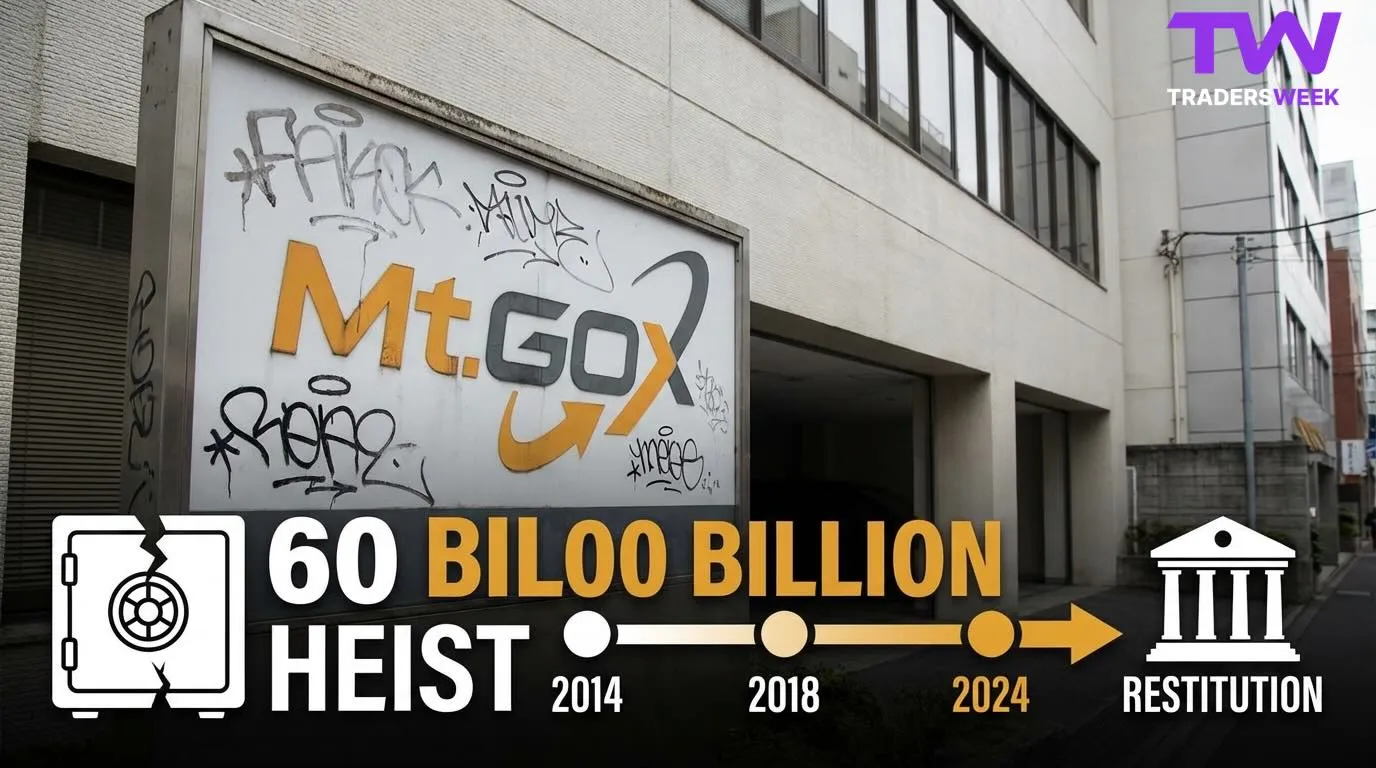
Exactly twelve years after the world’s first dominant Bitcoin exchange, Mt. Gox, abruptly halted operations, the shadows of the "Ultimate Catastrophe" still loom over the industry. What was once dismissed as a series of "technical bugs" in February 2014 was later revealed to be the largest, multi-year siphoning of digital assets in history.
Risk Disclosure: The long-awaited release of Mt. Gox's recovered BTC reserves (approx. 142,000 BTC) represents a significant potential supply shock to the market. Historic events of this scale demonstrate the systemic risks of centralized custody. This analysis is for historical and educational purposes only.
In his definitive account, The Ultimate Catastrophe, author Mark Hunter reveals that the total damage was far greater than the initially reported 750,000 BTC. The exchange effectively lost 881,865 BTC—a haul valued at approximately $60.8 billion at early February 2026 prices (~$69,000/BTC).
The Breakdown of the Disaster:
- Customer Funds: ~750,000 BTC stolen from user wallets.
- Exchange Assets: ~100,000 BTC of Mt. Gox’s own reserves disappeared.
- The "Slow Bleed": Evidence suggests the exchange was insolvent as early as 2012, with a hacker siphoning hot wallet keys in a series of six distinct breaches.
Featured Snippet Answer: Mt. Gox was a Tokyo-based Bitcoin exchange that collapsed in 2014 after losing over 881,865 BTC due to multiple hacks and management failures. As of 2026, the lost assets are valued at over $60 billion. Following a decade of litigation, the rehabilitation trustee has set a final deadline of October 31, 2026, to complete the distribution of approximately 142,000 recovered BTC and BCH to thousands of global creditors.
While much of the stolen fortune remains a mystery, the U.S. Department of Justice made a breakthrough in 2017 (and further unsealed in 2023). Two Russian nationals, Alexey Bilyuchenko and Aleksandr Verner, were charged with conspiring to launder 647,000 BTC from the 2011 hack.
- BTC-e Integration: Bilyuchenko allegedly used the stolen funds to help establish the notorious BTC-eexchange, which served as a primary conduit for cybercriminals until it was shut down in 2017.
- Untouched Reserves: Despite the charges, several cold wallet addresses remain active but frozen. One famous address holds 79,956 BTC that has not moved since 2011, serving as a digital monument to the heist.
After years of delays, the "Rehabilitation Plan" is reaching its final phase. The trustee, Nobuaki Kobayashi, has officially moved the repayment deadline to October 31, 2026, to accommodate creditors who faced technical hurdles with KYC or exchange registrations.
Repayment Stats:
- Recovered Assets: ~142,000 BTC, ~143,000 BCH, and 69 billion JPY.
- The "Wait-and-See" Market: Institutional traders on TradingView are closely monitoring the "Trustee Wallets." Any movement of these coins toward exchanges like Kraken or Bitstamp typically triggers short-term volatility as the market braces for potential sell pressure.
The Mt. Gox collapse birthed the phrase "Not your keys, not your coins." "I remember the day the 'withdrawal suspended' notice went up," says a veteran trader who lost 150 BTC in the collapse. "The lesson wasn't just about security; it was about the danger of blind trust in a 'too big to fail' exchange. Even today, with regulated ETFs, the Mt. Gox story is the ultimate reminder that transparency and proof-of-reserves are non-negotiable."
- Investopedia: History and Collapse of Mt. Gox: https://www.investopedia.com/terms/m/mt-gox.asp — Full historical context.
- U.S. DOJ: Russian Nationals Charged in Mt. Gox Heist: https://www.justice.gov/opa/pr/russian-nationals-charged-hacking-one-cryptocurrency-exchange-and-illicitly-operating-another — Legal documentation of the 647k BTC hack.
- Mt.Gox Rehabilitation Trustee Official Portal: https://www.mtgox.com/ — Information on the October 2026 deadline.
- Arkham Intelligence: Mt. Gox On-Chain Tracker: https://platform.arkhamintelligence.com/explorer/entity/mt-gox — Current balance monitoring.
Q: Why is the repayment taking over 12 years? A: The process was delayed by complex Japanese bankruptcy laws, the conversion from bankruptcy to "civil rehabilitation" (which allowed creditors to receive BTC instead of JPY), and several lawsuits from parties claiming a share of the remaining assets.
Q: Will the 142,000 BTC repayment crash the market? A: While $10B worth of BTC hitting the market is significant, many creditors are long-term "believers" who may choose to hold. Additionally, much of the selling pressure has already been "priced in" by the market over the last decade of anticipated releases.
Q: Was Mark Karpeles ever convicted? A: Karpeles was cleared of embezzlement charges but was given a suspended sentence for "tampering with financial records." He has since moved on to other projects, though he remains a polarizing figure in the crypto community.
📜 #MtGox #BitcoinHistory #CryptoSecurity #MarkKarpeles