

📣 Create Blog for Traders!
Stop Watching news - Start Making it.
START



Bloomberg Warning: The Bitcoin $10K Crash Risk in 2026

By Macro & Digital Assets Strategy Desk | Last Updated: February 17, 2026
The cryptocurrency market has long debated whether Bitcoin acts as a safe-haven asset or a high-beta tech stock. According to recent macroeconomic analysis, the answer heavily leans toward the latter. Senior macro strategist Mike McGlone has issued a stark warning: if the US stock market enters a full-fledged bear phase driven by a recession, Bitcoin could face catastrophic downward pressure.
Pointing to stretched equity valuations, abnormally low volatility, and a noticeable capital flight toward physical gold and silver, analysts project that a reversal in the S&P 500 could initially drag BTC down to the $56,000 support level. In a severe "risk-off" scenario, the ultimate capitulation target is projected at a staggering $10,000.
Risk Disclosure: Holding highly volatile digital assets during a macroeconomic recession carries an extreme risk of capital loss. A drop to $10,000 would represent an unprecedented wipeout of retail wealth. The SEC continuously warns investors about the extreme volatility of crypto assets during broader financial market distress. Never invest capital you cannot afford to lose completely.
Featured Snippet Answer:
According to Bloomberg strategist Mike McGlone, the Bitcoin $10K crash risk in 2026 is driven by a potential US stock market bear phase. If a recession triggers an S&P 500 reversal, capital will flow to safe-haven assets like gold, potentially collapsing Bitcoin first to $56,000, and ultimately toward $10,000.
To understand how a $10,000 Bitcoin valuation is mathematically possible, we must analyze the underlying mechanics of global liquidity.
Bitcoin does not exist in a vacuum. It is heavily reliant on excess fiat liquidity. When the S&P 500 drops due to recessionary fears, a domino effect occurs:
- Margin Calls: Institutional funds holding both equities and crypto face margin calls on their stock portfolios.
- Forced Liquidations: To cover their equity losses, these funds are forced to sell their most liquid, profitable assets. Often, Bitcoin is the first asset dumped because crypto markets trade 24/7.
- Capital Flight: Institutional capital systematically rotates out of "Risk-On" assets (like tech stocks and Bitcoin) and into "Risk-Off" assets (like US Treasuries, physical gold, and silver).
Why does Bitcoin crash when stocks crash? Professional traders measure this relationship using the Pearson correlation coefficient and Portfolio Beta
The statistical relationship is defined as:
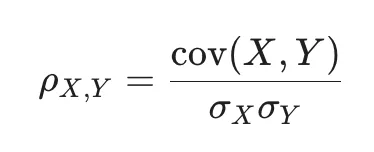
In simpler terms, during periods of quantitative easing (money printing), the correlation between Bitcoin and the Nasdaq/S&P 500 often approaches +0.70 or higher. Bitcoin behaves like a leveraged technology stock.
Therefore, if the S&P 500 suffers a 20% bear market drawdown, Bitcoin's high historical beta suggests it could suffer a 60% to 80% drawdown, rapidly validating the $56,000, and eventually the $10,000 downside targets. For a deeper understanding of correlation, Investopedia's guide to Beta is highly recommended.
The theory of macro correlation is clean; the reality of trading it is brutal.
A Liquidation Scenario:
During previous macro-induced crypto crashes, many retail traders attempted to "buy the dip" at major psychological support levels, assuming Bitcoin would decouple from the stock market.
- The Setup: A trader sees Bitcoin drop to $56,000 while the S&P 500 is tanking. They open a 5x leveraged long position, assuming $56K is the absolute bottom.
- The Reality Check: They ignore the VIX (Volatility Index). The VIX spikes from 15 to 35, indicating severe stock market panic. Traditional funds aggressively short Bitcoin futures on the CME to hedge their tech exposure.
- The Result: The immense selling pressure effortlessly breaks the $56,000 support. The trader's leveraged long is liquidated, adding more fuel to the downward spiral.
If you do not monitor macro indicators like the VIX and the US Dollar Index (DXY) during a recession, you are trading blind. Babypips offers excellent resources on trading macro indicators.
McGlone's analysis specifically highlights the capital rotation into precious metals. In 2025 and 2026, gold has consistently broken all-time highs.
This divergence is the ultimate warning sign.
- Complacency: The equity market has experienced "abnormally low volatility," meaning investors have become too comfortable with high prices.
- The Catalyst: A negative GDP print, rising unemployment data, or a sudden credit event could instantly shatter this complacency, triggering the mass exodus from Bitcoin into the proven safety of gold.
Q: Will Bitcoin definitely drop to $10,000?
A: No, this is a worst-case scenario. $10,000 represents a deep capitulation target if a severe, prolonged global recession forces massive institutional liquidations. The first major test would be the $56,000 support level.
Q: Why do traders buy gold instead of Bitcoin during a stock market crash?
A: Gold has thousands of years of history as a store of value and is widely held by central banks. Bitcoin, while often called "digital gold," is still heavily classified by algorithms and institutions as a high-risk technology asset.
Q: How can I protect my crypto portfolio from a stock market crash?
A: Risk management strategies include reducing leverage, increasing cash/stablecoin reserves, and closely monitoring traditional market indices (S&P 500, VIX, DXY) rather than just looking at crypto charts.