

📣 Create Blog for Traders!
Stop Watching news - Start Making it.
START


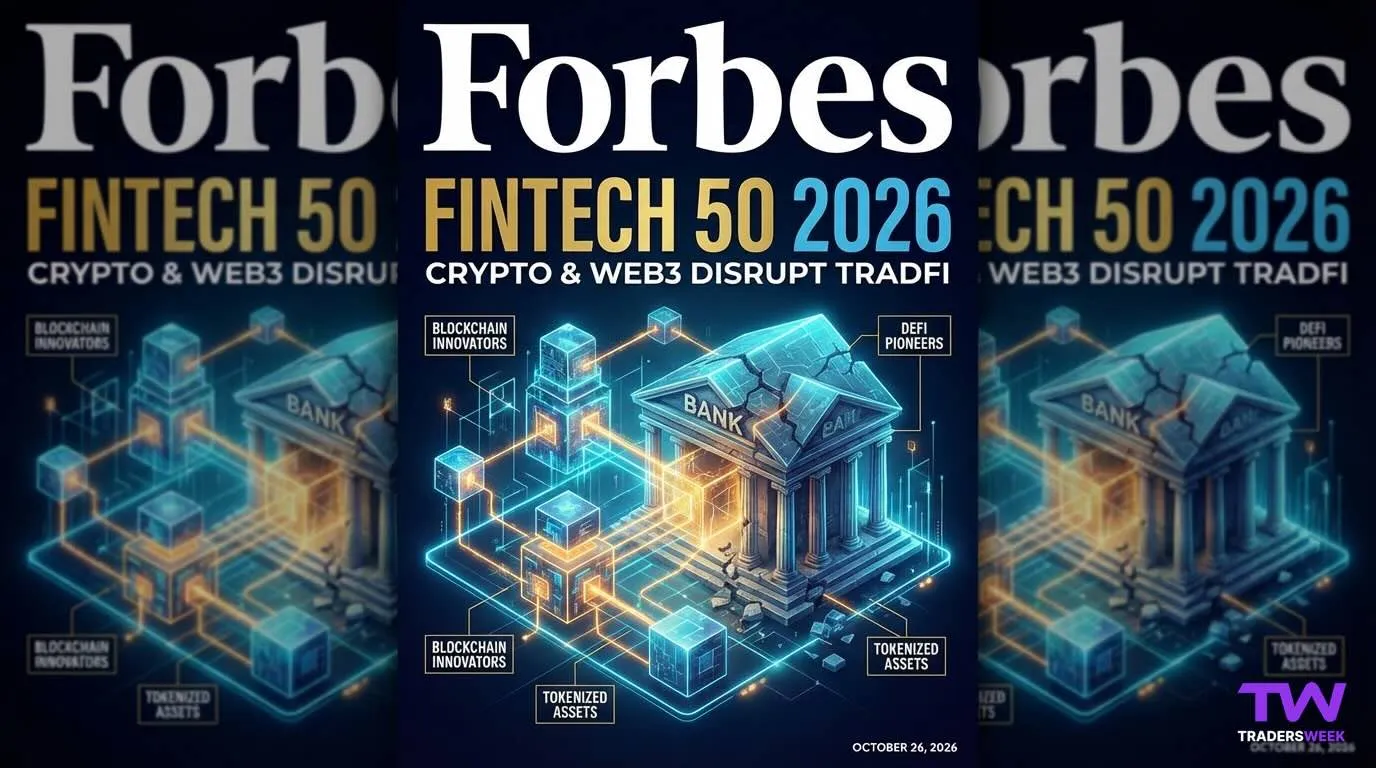
Forbes Fintech 50 2026: Crypto & Web3 Disrupt TradFi
By Digital Assets & Fintech Research Team | Last Updated: February 21, 2026
The definition of financial technology is undergoing a massive paradigm shift. For years, the prestigious Forbes Fintech 50 list was dominated by traditional payment processors, neobanks, and corporate expense software. However, the 2026 iteration of the list reveals a definitive changing of the guard: six cryptocurrency and Web3-native companies have successfully penetrated the top 50 rankings.
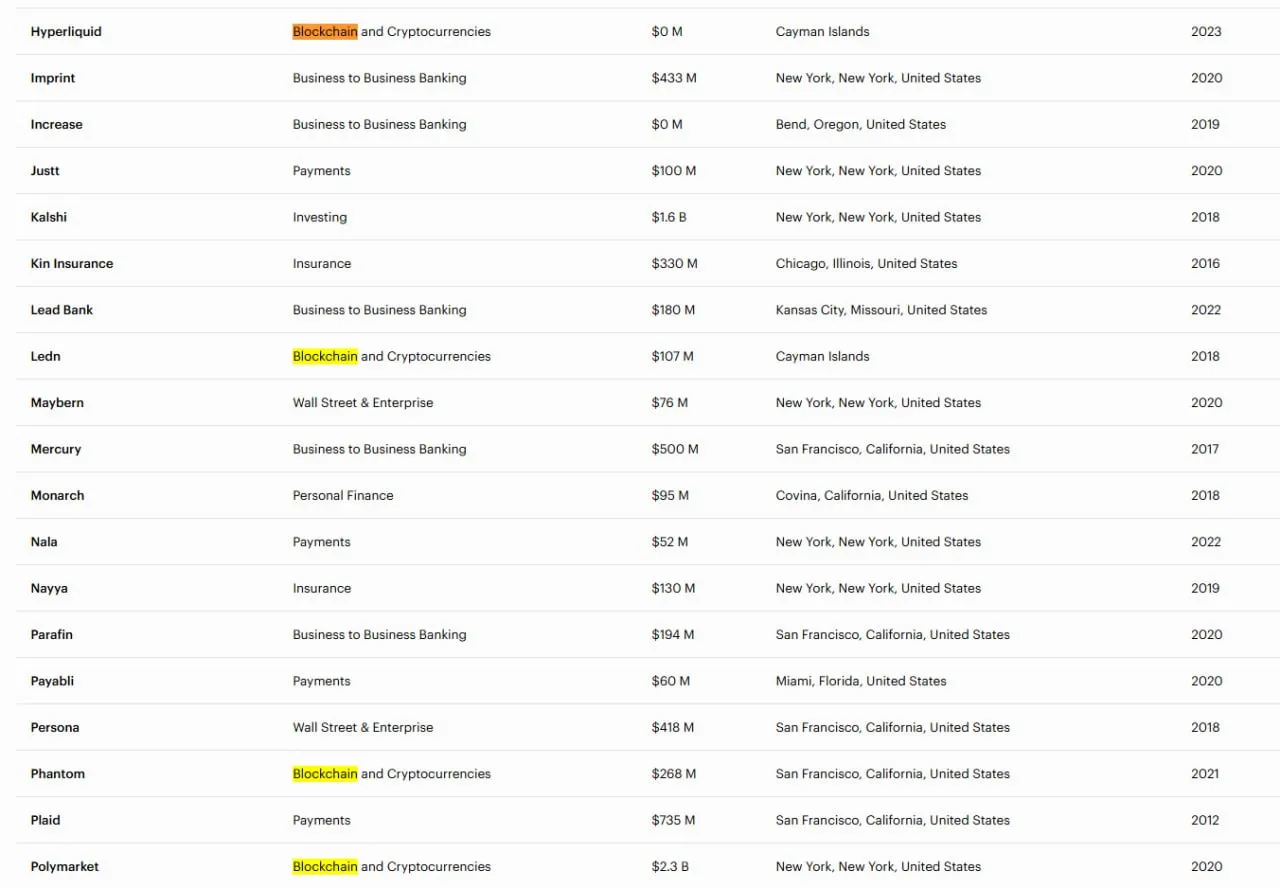
Spanning across Decentralized Exchanges (DEXs), Real-World Asset (RWA) tokenization, crypto lending, and the explosive prediction market sector, platforms like Hyperliquid, Ledn, Kalshi, Polymarket, Phantom, and Securitize are proving that blockchain infrastructure is no longer a speculative niche—it is the new foundation of global finance.
Risk Disclosure: Interacting with decentralized finance protocols, unregulated prediction markets, and crypto lending platforms carries substantial risk, including smart contract vulnerabilities, regulatory enforcement actions, and total loss of capital. This analysis is for educational purposes and does not constitute financial advice.
Featured Snippet Answer: In 2026, six cryptocurrency and Web3 companies made the Forbes Fintech 50 list, highlighting the industry's mainstream adoption. The recognized firms are Hyperliquid (DEX), Phantom (Web3 Wallet), Securitize (RWA Tokenization), Ledn (Crypto Lending), and two prediction markets: Kalshi and Polymarket.
To understand why traditional fintech is losing ground to these Web3 innovators, we must analyze the specific sectors these six companies dominate.
Perhaps the most significant narrative of 2025 and early 2026 has been the mainstream breakout of prediction markets. By allowing users to bet real money on real-world outcomes (from macroeconomic data prints to election results), these platforms have become alternative news sources and powerful financial hedging tools.
The Forbes list highlights two distinct approaches to this sector:
- Polymarket (The Crypto-Native Giant): Operating entirely on the Polygon blockchain, Polymarket relies on USDC and decentralized oracles. It captures massive global liquidity but operates in a regulatory gray area for US citizens.
- Kalshi (The Regulated Challenger): Unlike Polymarket, Kalshi is fully regulated by the Commodity Futures Trading Commission (CFTC) in the United States. It settles contracts in US dollars, proving that event contracts can thrive within strict regulatory frameworks.
The integration of TradFi (Traditional Finance) and DeFi is heavily reliant on generating sustainable, non-inflationary yield. Two companies on the Forbes list are spearheading this movement.
- Securitize (RWA Tokenization): Securitize has positioned itself as the premier transfer agent for tokenizing real-world assets. Their landmark partnership with BlackRock to launch the BUIDL fund (a tokenized Treasury fund) proved that Wall Street is ready to move billions of dollars on-chain for instant settlement and operational efficiency.
- Ledn (Crypto-Backed Lending): In a post-Celsius and post-BlockFi world, Ledn survived by offering transparent, rigorously audited Bitcoin and USDC lending and savings products. Their inclusion signals that trust has returned to the centralized crypto lending sector, provided it is backed by strict risk management.
The fallout from centralized exchange collapses in previous years permanently altered trader behavior. The 2026 market demands self-custody without sacrificing execution speed.
- Hyperliquid (Perpetual DEX): Hyperliquid operates as an entirely independent Layer-1 blockchain custom-built for high-frequency trading of perpetual futures. By offering a fully on-chain order book with zero gas fees for trading, it provides a centralized exchange experience while allowing traders to maintain custody of their funds.
- Phantom (Web3 Infrastructure): Originally the dominant wallet for the Solana ecosystem, Phantom has evolved into a multichain powerhouse. It acts as the primary gateway for millions of retail users to access decentralized applications, NFTs, and DeFi protocols seamlessly.
While inclusion in the Forbes Fintech 50 is a massive validation, trading and investing in these ecosystems require advanced risk management.
- Regulatory Arbitrage: The inclusion of both Kalshi and Polymarket highlights a friction point. Traders using offshore platforms like Polymarket face the constant threat of geo-blocking or regulatory crackdowns.
- Smart Contract Risk: Platforms like Hyperliquid process billions in volume. While highly audited, any decentralized protocol carries the inherent risk of a smart contract exploit, which could lead to an immediate drain of liquidity pools.
As noted by the SEC's Office of Investor Education, the rapid innovation in DeFi often outpaces investor protection frameworks.
The 2026 Forbes Fintech 50 list confirms what crypto-natives have known for years: the financial rails are being rebuilt. Securitize and Ledn are bridging institutional capital, Kalshi and Polymarket are revolutionizing how we hedge against world events, and Phantom and Hyperliquid are decentralizing the actual mechanics of trading. TradFi is no longer ignoring Web3; it is being actively replaced by it.
Q: What does RWA stand for in crypto? A: RWA stands for Real-World Assets. It refers to the process of tokenizing traditional financial assets, such as stocks, real estate, or government bonds, and putting them on a blockchain. Securitize is a leader in this field.
Q: Are prediction markets like Kalshi and Polymarket legal? A: Kalshi is regulated by the CFTC and is fully legal for US residents. Polymarket operates offshore using cryptocurrency; its legality depends heavily on the user's local jurisdiction, and it is technically restricted for US users.
Q: Why use a DEX like Hyperliquid instead of a centralized exchange? A: Decentralized exchanges allow traders to retain control of their private keys (self-custody). If a centralized exchange goes bankrupt, your funds could be lost. On a DEX, your funds remain in your wallet until a trade is executed via a smart contract.
- Macro Context: Forbes Official - The Fintech 50 (Contextual reference)
- Regulatory Risk Education: SEC.gov - Investor Alerts on Digital Assets
- Financial Concepts: Investopedia - What is a Decentralized Exchange (DEX)?
- Tokenization Context: Investopedia - Tokenization