

📣 Create Blog for Traders!
Stop Watching news - Start Making it.
START


Pudgy Penguins Drop: Why I'm Buying While Others Panic
Everyone is watching the floor price. They're looking at the wrong metric. My DeFi-focused analysis reveals the real levels to watch for this blue-chip NFT.
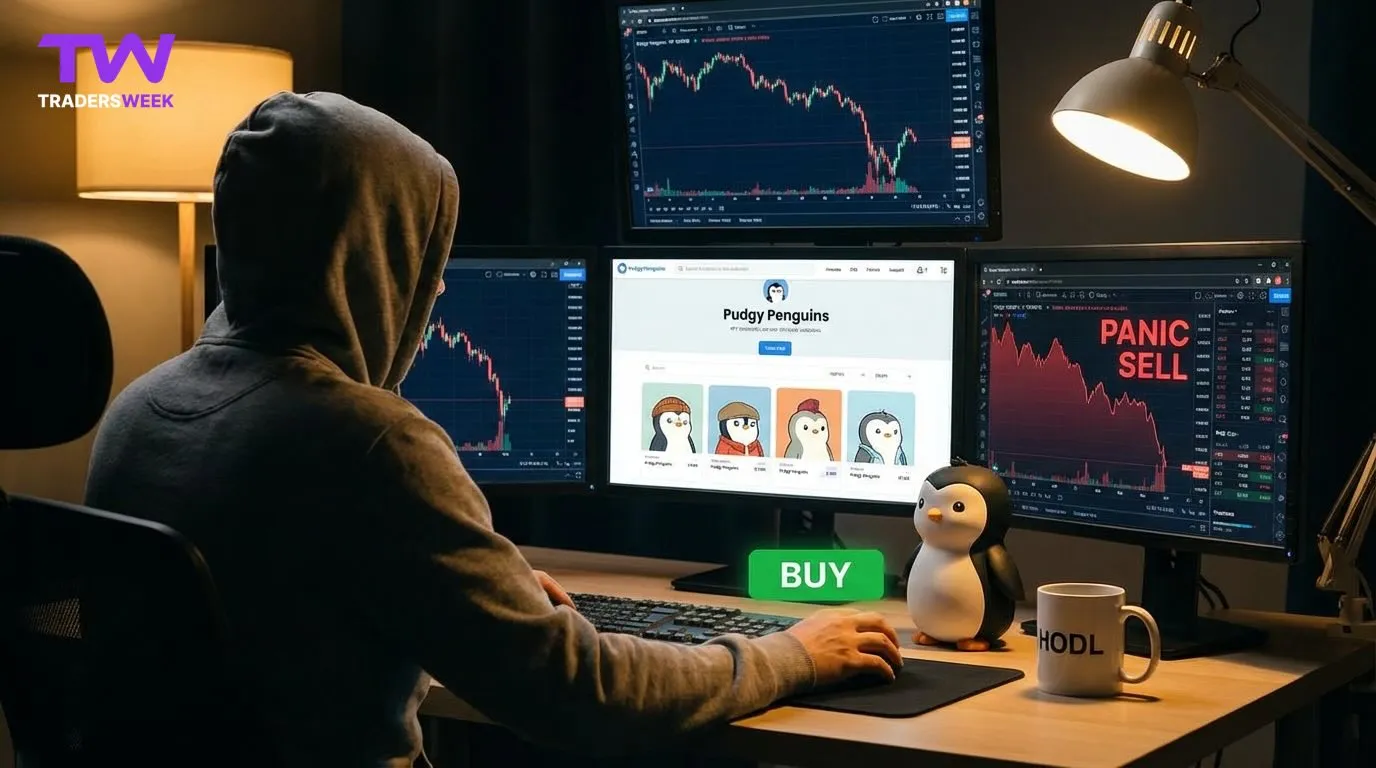
Let’s get one thing straight: the panic selling on Pudgy Penguins is a gift. While everyone is glued to the floor price on OpenSea, hitting refresh and freaking out, they're completely missing the on-chain story. I've been through enough cycles, starting back when I was farming YAM at 3 AM during the 2020 DeFi Summer, to know that surface-level price action is almost always a distraction. The real alpha is in the data, and the data tells me this dip is an opportunity, not an apocalypse.
Most analysts see an NFT collection. I see a decentralized ecosystem with its own micro-economy. My colleague Marcus Cole is probably charting the hourly wicks on the floor price, and that's his edge. But my analysis starts on Etherscan, not TradingView. I'm looking at holder distribution, the Gini coefficient of the collection, and the volume of transfers between cold wallets versus hot wallets. This morning, my dashboard showed a slight decrease in unique holders, but the wallets letting go are new entrants. The OGs are holding firm. That tells me the paper hands are getting flushed out. Perfect.
Forget the psychological 10 ETH level. The number I have my alerts set for is 7.5 ETH. Why? Because the on-chain data reveals that's a massive consolidation zone from four months ago where a significant cluster of long-term holders established their positions. A retest of that level would liquidate the over-leveraged borrowers on platforms like NFTfi and shake out the last of the tourists who bought the top. It’s a pain point. And pain points are where the best entries are made. This isn't just about price; it's about the health of the entire lending market built on top of these assets. A cascade there is my buy signal.
Here's the real long-term thesis. We're seeing one of the first truly successful examples of tokenized real world assets, but it's disguised as a cute penguin JPEG. The asset isn't the image; it's the intellectual property (IP). The Pudgy toys in Walmart, the licensing deals—that’s the cash flow. For anyone who needs an **RWA tokenization explained**, this is it in its rawest form: a digital token representing ownership and commercial rights to a unique, brandable asset. I've allocated 20% of my own portfolio to more traditional RWA tokens like Ondo and Centrifuge, and I view this Pudgy play through the exact same lens. It’s a bet on the financialization of everything, including culture.
Now, I don't just ape in. I read audit reports for fun, and I've been burned by enough rug pulls to check everything. So, here's my quick **DeFi risk assessment** for the collection. Smart Contract Risk: Low. It's a standard ERC-721 contract. I've read through it; there are no hidden functions or backdoors. Ownership is centralized with the founding team, which is a risk, but their public-facing execution has been solid. Market Risk: Extremely High. NFTs are notoriously illiquid. You can't just market-sell ten of them without crashing the floor. This is a conviction play, not a trade. Brand Risk: Medium. The biggest risk is that the hype dies and the brand becomes irrelevant. The bet is that they can bridge the gap from a crypto-native brand to a globally recognized one.
So, am I buying today? No. My bids are set, patiently waiting for that 7.5 ETH zone. The short-term noise is just that—noise. The long-term thesis on digital IP as a real, yield-generating asset class feels stronger than ever. So I have to ask: am I crazy for wanting to buy this dip while the market is bleeding, or is everyone else missing the real revolution happening right under their noses?