

📣 Create Blog for Traders!
Stop Watching news - Start Making it.
START


The Stock Market is Too Complacent. Here's My Outlook.
Everyone is chasing the same seven tech stocks. My models suggest the real opportunities—and risks—are hiding elsewhere. A deep dive into my S&P 500 price forecast.
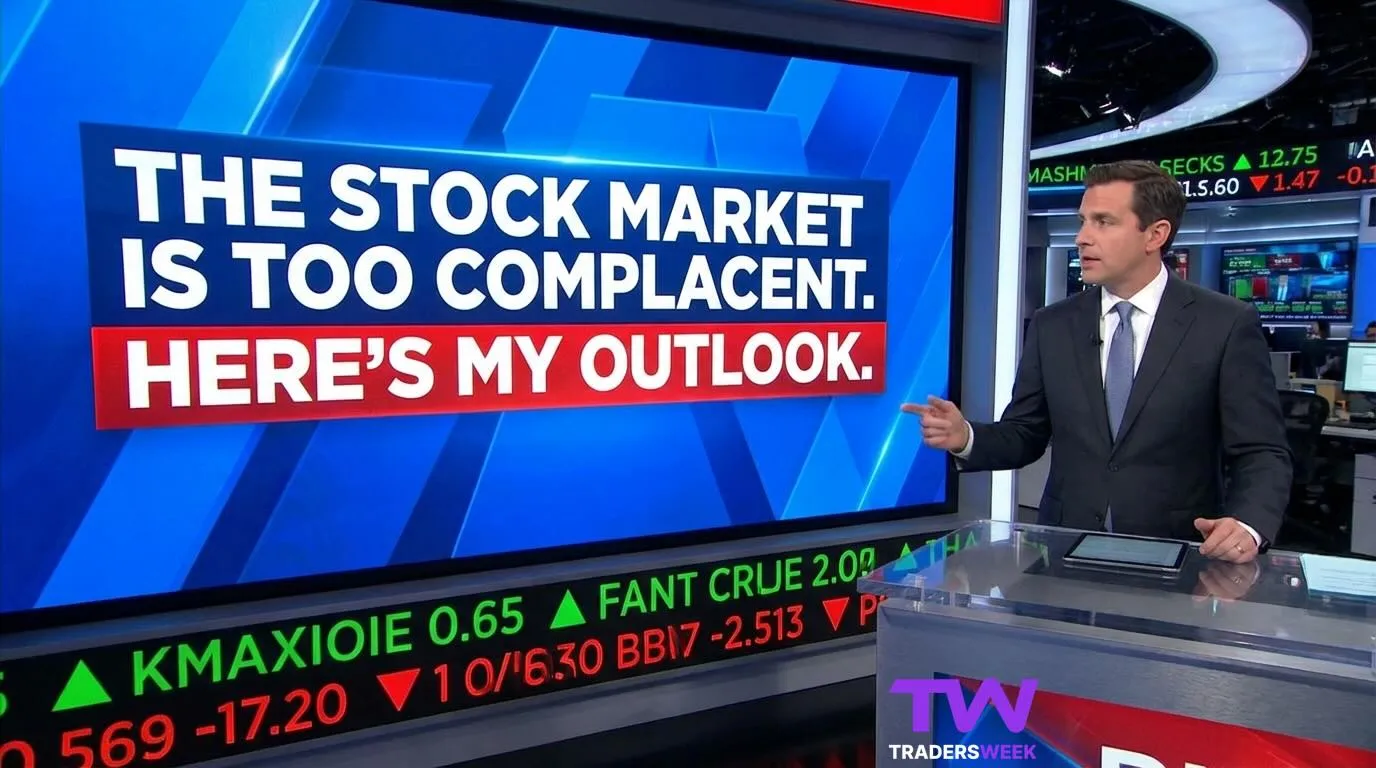
I've been looking at the pre-market movers every morning, and the sentiment is getting dangerously euphoric. Everyone seems to think the AI-fueled rally in mega-cap tech is a one-way street. My detailed stock market analysis this week suggests this is precisely the kind of complacency that precedes a correction. The S&P 500 is trading at a forward P/E of over 21x, driven almost entirely by a handful of names. When I left Goldman, it was to escape groupthink, and right now, the market feels like one big consensus trade. Let's break down the fundamentals.
Look, I get the excitement. But fundamentals always win in the end. The S&P 500's earnings yield is currently hovering around 4.7%, while the 10-year Treasury is yielding close to 4.5%. That's an equity risk premium of just 0.2%. Historically, that's razor-thin. It tells me investors are not being compensated for the risk of holding stocks over 'risk-free' government bonds. My discounted cash flow (DCF) models, which I update quarterly for the index, are struggling to justify current levels without assuming some heroic, multi-year growth assumptions that seem... optimistic. My base case S&P 500 price forecast for year-end is closer to 5,000, implying a modest pullback from here, not the rocket ship many are expecting.
The concentration risk in the NASDAQ 100 is something I haven't seen since the dot-com era. The top 10 names make up over 45% of the index. While my friend Jake Morrison is excellent at riding short-term momentum in these names, I'm a fundamentals-first strategist, and I have to ask: what's already priced in? For some of these stocks, the answer is 'perfection.' I'm not saying short them—that's a widowmaker trade. But I am certainly not initiating new long positions at these valuations. I'm trimming my exposure to the big tech names in my growth portfolio and rotating that capital into less crowded areas.
So, where am I putting my capital? I've been building positions in sectors that have been left behind. Specifically, select industrials and healthcare names with strong balance sheets and reasonable valuations. They're not as exciting, I know. They don't have a flashy AI story. But they have solid free cash flow generation and trade at 15-17x forward earnings, not 30-40x. The footnotes in their 10-K filings show manageable debt and stable margins. That’s my kind of story.
- Industrials (XLI): Focused on companies with large, visible order backlogs.
- Healthcare (XLV): Non-cyclical demand and aging population tailwinds.
- Financials (XLF): Select regional banks with strong deposit bases, now that the panic has subsided.
- Consumer Staples (XLP): Defensive positioning if the consumer weakens.
The market seems convinced the Fed has engineered a perfect soft landing. I'm not so sure. Alex Volkov has been covering the Fed's every move, but I'm watching the consumer data. Credit card delinquencies just hit their highest level in over a decade. That's not a sign of a healthy consumer. And while headline inflation has come down, services inflation remains stubbornly high. If we get a 'no landing' scenario where growth re-accelerates and the Fed has to hold rates higher for even longer, the long-duration growth stocks that lead the market will be the first to get hit. The market is pricing in rate cuts this year, but the real risk is that we get none.
The market is paying a premium for exciting stories. I prefer to buy boring balance sheets at a discount.
This isn't a call to sell everything and hide in cash. My portfolio is still majority long equities. But it is a call for discipline. Chasing performance in the most expensive, most crowded names in the market is rarely a winning strategy long-term. My edge has always been in doing the homework others won't, and right now, the homework suggests caution. So, my question to you is this: have you stress-tested your portfolio for a scenario where the top 10 tech stocks go nowhere for the next 12 months?