

📣 Create Blog for Traders!
Stop Watching news - Start Making it.
START



ZachXBT Crypto Insider Trading Exposé 2026
By On-Chain Forensics & Regulatory Desk | Last Updated: February 23, 2026
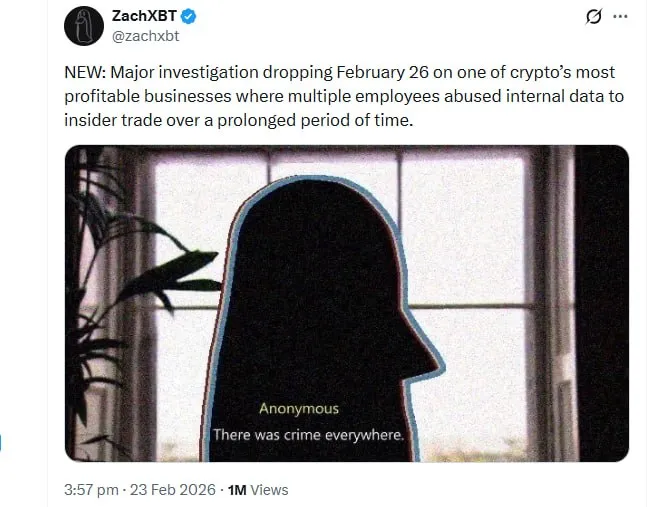
The cryptocurrency market is currently holding its collective breath. Renowned on-chain sleuth ZachXBT has publicly announced that on February 26, 2026, he will release a massive, multi-part investigation exposing systemic insider trading. The target? Described only as "one of the most profitable cryptocurrency companies" in the industry, where multiple employees allegedly abused confidential internal data over an extended period to execute highly lucrative, illicit trades.
Because ZachXBT's blockchain forensics have historically led to multi-million dollar asset freezes and federal indictments by the US Department of Justice (DOJ), this announcement has triggered intense speculation and market anxiety. With only days until the drop, traders are scrambling to identify the target and protect their portfolios from the inevitable fallout.
Risk Disclosure: Attempting to short-sell crypto assets based on unconfirmed rumors regarding this investigation carries extreme financial risk. Volatility will be unprecedented leading up to February 26. Furthermore, if the implicated company is a centralized exchange or lending platform, user funds may be at risk. The SEC continuously warns about the dangers of extreme volatility during regulatory or criminal exposure events.
Featured Snippet Answer: Crypto insider trading occurs when employees of a blockchain company, exchange, or protocol use non-public, confidential information to execute trades for personal profit. Common tactics include "front-running" token listing announcements, buying assets just before a major positive press release, or shorting tokens before a publicized hack or bankruptcy filing is revealed.
To understand the severity of the upcoming February 26 exposé, we must break down how these illicit trades are typically executed and subsequently tracked:
- The Execution: An employee learns that their exchange is about to list a low-cap altcoin next week. They secretly purchase massive quantities of this token using anonymous wallets.
- The Pump: The exchange publicly announces the listing. Retail investors rush in, pumping the token's price by 50-100%.
- The Dump: The insider immediately sells their tokens into the retail buying pressure, locking in guaranteed, risk-free profit.
- The Fatal Flaw: Blockchains are immutable public ledgers. While the wallets are anonymous, the transaction history is permanent. Sleuths like ZachXBT use advanced clustering algorithms to link these "anonymous" wallets back to the IP addresses or centralized exchange accounts of the specific employees.
The fear gripping the market is justified by historical precedent. Federal regulators treat digital asset insider trading with the same severity as traditional Wall Street crimes.
- The OpenSea Case: In a landmark NFT insider trading case, an executive was convicted of wire fraud and money laundering for buying NFTs right before he featured them on the platform's homepage.
- The Coinbase Case: A former product manager at a major US exchange was sentenced to prison for tipping off his brother about upcoming token listings, generating over $1.5 million in illicit profits.
For a deeper understanding of the legal definitions, Investopedia's breakdown of Insider Trading provides excellent context on why this crosses the line from unethical behavior to federal crime.
From a trading desk perspective, the 72-hour window before a major ZachXBT investigation is released is highly treacherous.
The "Witch Hunt" Trap:
- The Mistake: Retail traders are currently scouring X (Twitter) and Reddit, guessing which company is the target. If a rumor gains traction that "Company A" is the culprit, traders will aggressively short Company A's native token.
- The Squeeze: If February 26 arrives and ZachXBT actually exposes "Company B," the traders who shorted Company A will face a massive short-squeeze as the relief rally liquidates their positions.
- The Professional Protocol: Do not guess. Institutional traders are currently de-risking. If they hold funds on a highly profitable exchange that they suspect might be the target, they are temporarily moving assets to cold storage. It is the classic "Withdraw first, ask questions later" strategy.
The forthcoming ZachXBT investigation represents a critical stress test for the integrity of the Web3 ecosystem. By exposing corporate corruption and the abuse of retail liquidity by industry insiders, on-chain sleuths provide the transparency that decentralized finance was built upon. As the clock ticks down to February 26, investors must prioritize capital preservation, avoid rumor-driven leverage, and prepare for a seismic shift in industry accountability.
Q: Who is ZachXBT? A: ZachXBT is an anonymous, highly respected on-chain researcher and blockchain investigator. He is funded by community donations and is known for exposing multi-million dollar crypto scams, rug pulls, and insider trading rings.
Q: Is insider trading illegal in crypto? A: Yes. The US Department of Justice (DOJ) and the Securities and Exchange Commission (SEC) have successfully prosecuted multiple individuals for insider trading involving digital assets, classifying it as wire fraud and securities fraud.
Q: What should I do if my exchange is named in the report? A: If a platform you use is implicated in systemic fraud, the safest immediate action is to withdraw your funds to a self-custodial hardware wallet until the regulatory fallout and leadership changes are fully resolved.
- Primary Source: ZachXBT Official Announcement (X)
- Legal Framework: Investopedia - Insider Trading Explained
- Risk & Regulation: SEC.gov - Investor Alerts on Digital Assets